Kitchen note
The monarch butterfly: Nature's delicate voyager
Each fall, as autumn colors spread across the landscape and temperatures begin to drop, one of North America’s most spectacular migrations gets underway. Millions of monarch butterflies (Danaus plexippus), recognizable by their brilliant orange-and-black wings, travel enormous distances in search of warmer conditions and suitable places to spend the winter.
Corbin Wells
Cook
Bench note
The full story and useful tips are below.
Shelf
Plant kitchen
Each fall, as autumn colors spread across the landscape and temperatures begin to drop, one of North America’s most spectacular migrations gets underway. Millions of monarch butterflies (Danaus plexippus), recognizable by their brilliant orange-and-black wings, travel enormous distances in search of warmer conditions and suitable places to spend the winter.
From Canada and the United States, these fragile-looking insects journey toward the oyamel fir forests of central Mexico. Some travel as far as 3,000 miles, making this one of the longest migrations undertaken by any insect.
Although an individual monarch weighs less than a paperclip, the species plays an important role in its ecosystems. Yet the remarkable migration is increasingly threatened, and monarch butterflies face numerous challenges that could affect their future.
Habitat and Environment
Monarch butterflies are most strongly associated with North America, although smaller populations also occur in South America, Australia, New Zealand, and Hawaii.
Their habitats change dramatically throughout their annual cycle. During the warmer months, they reproduce in meadows and other areas across the United States and Canada where milkweed grows. In winter, populations from eastern North America gather in the mountain forests of Mexico, while western populations use scattered coastal groves in California.
These different habitats provide the resources monarchs need at various stages of their annual journey, from breeding and feeding to migration and overwintering.
The Oyamel Fir Forests of Mexico
The Mexican wintering grounds of the monarch butterfly are located within a UNESCO World Heritage site. These mountain forests are frequently covered by mist and filtered sunlight, creating a cool and protected environment.
Oyamel fir trees (Abies religiosa) provide an especially important refuge. Monarchs gather in large clusters on the trees, where the forest creates a suitable microclimate that helps them conserve warmth and remain protected during the winter.
The thick forest canopy also offers shelter from heavy rainfall, powerful winds, and sudden drops in temperature, all of which can threaten the butterflies' survival.
This specialized environment is extremely important because monarchs depend on these conditions to conserve energy during the winter before beginning their northward migration.
Unfortunately, these wintering habitats are under pressure. Deforestation, illegal logging, and changes in land use in Mexico threaten important overwintering forests. In the United States and Canada, pesticide use and the widespread loss of milkweed have also reduced important breeding habitat.
Physical Traits and Behavior
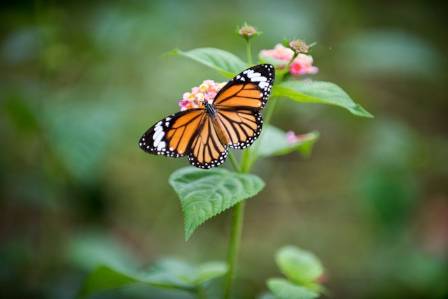
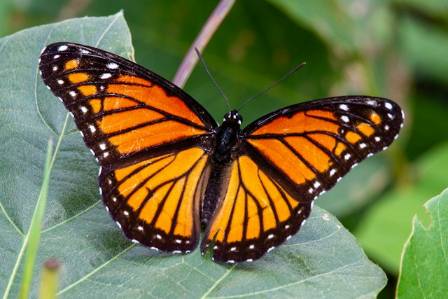
Monarch butterflies are easy to recognize because of their vivid orange wings, black markings, and rows of white spots. Their bright coloration serves as a warning to predators that the butterflies can be toxic.
Male and female monarchs can be distinguished by several physical features. Males have two prominent black spots on their hind wings and generally thinner black wing veins. Females do not have these spots and have thicker black veins.
Adult monarchs have a wingspan of approximately 4 inches, or 90–100 millimeters.
The Milkweed Connection
Milkweed plants belonging to the genus Asclepias are essential to the monarch's life cycle. Monarch caterpillars feed exclusively on milkweed, making the plant indispensable for reproduction.
Milkweed provides more than food. Its leaves contain toxic compounds called cardenolides. Caterpillars consume these substances and retain them as they develop, making monarchs poisonous and helping deter potential predators.
Unfortunately, milkweed has been disappearing rapidly. Extensive herbicide use associated with industrial agriculture, urban development, and roadside management has reduced the amount of milkweed available across much of the monarch's range.
The loss of this essential host plant directly reduces opportunities for monarchs to reproduce and creates an additional threat to their long-term survival.
An Epic Migration
The monarch's migration is one of the most remarkable features of its biology. No individual butterfly completes the entire annual journey from its summer range to the wintering grounds and back again. Instead, several generations participate in the overall cycle.
Monarchs born toward the end of summer enter a physiological state known as diapause. Rather than immediately reproducing, these butterflies delay reproduction and devote their energy to migration.
This generation is often referred to as the “super generation.” Unlike ordinary monarchs, which typically live for only two to six weeks, these migratory butterflies can survive for as long as nine months.
The Life Cycle
Egg Stage
Female monarchs place tiny, pearl-like eggs on the undersides of milkweed leaves. These eggs provide the starting point for the next generation.
Caterpillar Stage
After hatching, the young caterpillar begins consuming milkweed leaves. It grows quickly and sheds its skin several times as its body increases in size.
Chrysalis Stage
Once fully developed as a caterpillar, it forms a jade-green chrysalis decorated with small golden markings. Inside this protective structure, the transformation into an adult butterfly takes place.
Adult Stage
A fully developed monarch eventually emerges from the chrysalis. The adult butterfly begins feeding on flower nectar and, when it belongs to the migratory generation, prepares for its long-distance journey.
Ecological Significance
Monarch butterflies contribute to pollination as they move between flowering plants while feeding on nectar. Although they are not considered the most efficient pollinators, their enormous geographic range means they can still make an important contribution to plant diversity and ecosystem function.
Monarchs can also serve as indicator species. Changes in their populations may reveal broader environmental problems, including habitat destruction and extensive pesticide use.
A significant reduction in monarch numbers can have effects beyond the butterflies themselves. Birds, insects, and other organisms that depend on milkweed or monarchs as part of their diets may also experience indirect consequences when monarch populations decline.
Cultural Significance
Monarch butterflies have become widely associated with ideas of transformation, resilience, and hope. Their dramatic metamorphosis from egg to caterpillar, chrysalis, and finally adult butterfly has made them powerful symbols in art, literature, and spiritual traditions.
In Mexico, monarch butterflies have particular cultural importance. Their annual arrival in central Mexico occurs around the time of Día de los Muertos, or Day of the Dead. Some Indigenous communities regard the returning butterflies as representations of deceased loved ones, creating a symbolic connection between the living and the dead.
Different Native American cultures have also developed their own associations with butterflies. Among the Ojibwe, butterflies are believed to carry dreams and messages toward the spirit world. The Navajo associate butterflies with transformation and renewal.
The monarch's enormous journey across landscapes has also been interpreted as a representation of the human journey and the continuing cycle of death, transformation, and rebirth.
Conservation Status and Challenges
The future of the monarch butterfly remains a major conservation concern. In 2022, the International Union for Conservation of Nature (IUCN) classified the migratory monarch butterfly as Endangered.
The population has experienced a decline of as much as 90 percent over the previous two decades. Habitat loss, declining milkweed availability, pesticide exposure, and threats to overwintering forests all contribute to the difficulties facing the species.
In the United States, federal protection under the Endangered Species Act is also being proposed.
The monarch's extraordinary migration depends on a chain of habitats stretching across thousands of miles. Protecting breeding grounds, milkweed plants, migratory stopover areas, and Mexican and Californian wintering sites is therefore essential for maintaining this remarkable natural phenomenon.
More from the kitchen

· en
A Global Journey Through 7 Distinct Chocolate Beverages
Henry Caldwell

· en
Top 7 Packing Hacks for Last-Minute Travelers
Madeline

· en
The Ultimate Guide and Complete Presentation of the Majestic Arc de Triomphe Monument
Celeste Arkwright

· en
How do robotic arms work
Chloe Reed

· en
Beginner's Guide to Choosing and Using Grow Lights
Alric Fenwick

· en
Facts About Sea Lions
Cora Vesper