Kitchen note
Lighthouses: the solitary guards of the sea
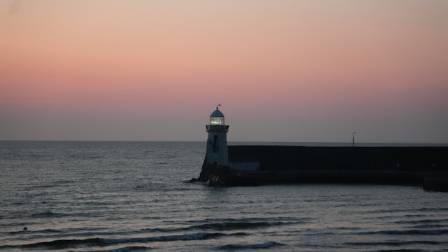
Lighthouses are among the most fascinating structures built by humans. Standing quietly between the ocean and the heavens, firmly rooted along coastlines, and constantly exposed to waves and winds, they represent the eternal meeting point between natural forces.
Genevieve Hollis
Cook
Bench note
The full story and useful tips are below.
Shelf
Plant kitchen
Lighthouses are among the most fascinating structures built by humans. Standing quietly between the ocean and the heavens, firmly rooted along coastlines, and constantly exposed to waves and winds, they represent the eternal meeting point between natural forces.
They define the fragile boundary between human civilisation and the unpredictable power of the sea, between security and uncertainty, and between what is familiar and what remains mysterious. This unique position has given lighthouses a universal charm that few other architectural creations possess.
Many lighthouses also carry a connection to religion and spirituality, as monks and religious communities once played roles in guiding and protecting sailors. The Chapel Lighthouse of St Nicholas on the Greek island of Kea, for example, was built upon the remains of an ancient temple dedicated to Poseidon and became the second lighthouse constructed in the newly established Kingdom of Greece.
Although lighthouses are functional structures that follow similar principles around the world, they have become deeply valued symbols of local identity. Some have transformed into famous landmarks, such as the Lanterna of Genoa, which has watched over the city and its harbour for centuries from its tall, elegant tower. Another example is the stone lighthouse of Alexandroupoli in northern Greece, standing among waterfront cafés and apartment buildings like a familiar companion to generations of residents.
The Evolution of Lighthouse Technology
In ancient times and throughout the Middle Ages, lighthouses relied on simple sources of illumination. Fires placed in baskets, braziers, or elevated platforms provided warning signals for ships approaching dangerous coastlines. Over time, lighthouse technology became increasingly advanced, with stronger, more dependable beams replacing primitive flames.
The materials used for lighting also evolved dramatically. Early fires depended on wood and coal, later replaced by vegetable and animal oils, before the arrival of gas and electricity in the late 19th century. These developments greatly improved the reliability and brightness of lighthouse signals.
The invention of advanced optical systems further transformed lighthouse design. Parabolic reflectors and specialised lenses allowed light to be concentrated into powerful beams visible from greater distances. In 1822, French physicist Augustin-Jean Fresnel created the famous Fresnel lens, a revolutionary design capable of collecting more angled light rays and directing them outward with remarkable efficiency.
Rotating mechanisms also changed the way lighthouses communicated with ships. Earlier coastal lights remained constant, making it difficult for sailors to distinguish one lighthouse from another, sometimes leading to disastrous shipwrecks. By the late 18th century, rotating systems introduced flashing patterns, and these became unique identification signals. Modern lighthouses use specific combinations of flashes, colours, and durations to distinguish individual locations and guide vessels safely.
Architectural Strength Against Nature
Although lighthouses are best known as sources of light during darkness, their physical structures also serve as powerful daytime markers. Their distinctive tapered forms were designed to survive extreme environments. The conical and curved profiles developed by engineers such as John Smeaton in the 18th century and later refined by the Stevenson family allowed wind and waves to flow around them instead of striking them with their full force.
These structures represent pure functional beauty. Their simple lines, balanced proportions, and isolated locations create a mysterious atmosphere. Many lighthouse names themselves recall the dangers they guard against, including Eddystone, Skerryvore, Dhu-Heartach, Wolf Rock, Minot’s Ledge, and the Graves.
Lighthouses were not only built beside cliffs and rocky shores. Dangerous underwater sandbanks and shallow coastal waters also threatened ships. The shifting Goodwin Sands near England, for example, became infamous among sailors as a hidden danger beneath the waves. Because permanent towers could not always be constructed in such unstable locations, floating lightships were introduced from the 17th century onward. These vessels remained anchored above hazardous areas, with crews enduring weeks of isolation, violent waves, and unpredictable weather.
Building on the Most Dangerous Waters
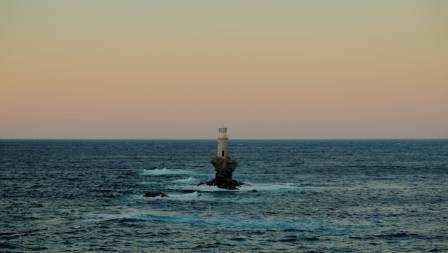
Advances in construction technology during the 20th century made it possible to establish permanent offshore lighthouses in places once considered impossible. Engineers developed prefabricated concrete structures and specialised foundations that allowed towers to be installed on unstable seabeds.
One notable example is the Royal Sovereign Lighthouse, positioned about 11 kilometres offshore from Eastbourne, England. Completed in 1971, it replaced a lightship that had protected the same dangerous shoal since 1875. Its unusual design, featuring a large platform balanced on a single concrete column, was constructed in two sections before being moved into position.
Placed on exposed cliffs, isolated rocks, and stormy coastlines, lighthouses exist between two worlds: the uncontrollable forces of nature and the organised environment created by humans. Today, they also represent the challenges of the Anthropocene, an era in which human activity has become a major influence on Earth’s systems. Rising seas, coastal erosion, stronger storms, and harsher weather conditions have placed many historic lighthouses at risk.
Lighthouses Facing Climate Change
For centuries, lighthouses have stood as silent observers of changing landscapes, but increasingly they have become victims of environmental transformation. Some have required dramatic rescue efforts to survive.
The Rubjerg Knude Lighthouse in northern Denmark is one of the most famous examples. When it began operating in 1900, it stood around 200 metres from the coastline. Decades of erosion gradually reduced that distance to only a few metres, and experts predicted that the 23-metre tower would eventually collapse into the sea. In 2019, a major preservation project moved the lighthouse 70 metres inland using specially designed rails. Although it had stopped functioning in 1968 after surrounding buildings were buried by sand, it was considered a cultural treasure worth protecting.
A similar effort took place in the United States with the Cape Hatteras Lighthouse. In 1999, the 60-metre structure was relocated nearly 900 metres inland to protect it from advancing coastal erosion. Along England’s eastern coast, however, many other lighthouses continue to face uncertain futures as climate change accelerates the loss of shorelines.
The Darker Side of Lighthouse History
Despite their association with safety and guidance, lighthouses have often been linked with mystery, isolation, and even fear. Their rise during the late 18th and 19th centuries coincided with a cultural fascination with dramatic landscapes, danger, and the sublime, which helped create their haunting reputation.
Paintings, literature, and popular imagination frequently portrayed lighthouses as lonely structures surrounded by storms, shipwrecks, and the unknown. Their remote locations and constant struggle against the elements contributed to their powerful symbolic meaning.
Environmental Problems Caused by Lighthouses
While lighthouses help humans navigate safely, their presence has also created ecological challenges. Artificial light has affected wildlife, especially seabirds. Since the 19th century, reports have described large numbers of birds becoming attracted to lighthouse beams and crashing into lantern windows. Even the lamp of the Statue of Liberty was responsible for the deaths of thousands of birds, including more than 1,300 in a single night in October 1887.
Older nuclear-powered lighthouses have created even greater environmental concerns. Along the Soviet Arctic coastline, 132 nuclear-powered navigation stations were built during the 1960s and 1970s. These remote installations used strontium-90 generators to operate without regular maintenance. After the collapse of the Soviet Union, many were abandoned, leaving behind dangerous radioactive materials. Some facilities were damaged or vandalised, and missing generators raised concerns about contamination spreading into Arctic rivers and surrounding seas.
The Enduring Legacy of Lighthouses
Lighthouses remain powerful symbols of hope, resilience, and human determination. They stand at the edge of civilisation, facing endless waves and storms while continuing to represent guidance and protection. Even as technology changes and many traditional lighthouse roles disappear, these remarkable structures continue to inspire people through their history, architecture, and connection to the natural world.
More from the kitchen
· en
Most Beautiful Lakes in the World
Alric Mercer

· en
Top-Tier Bookshelves to Elevate Your Home Library
Nathaniel Thomas Carrington

· en
The Remarkable World of the Blue-throated Bee-eater
Avery Quinn

· en
Discover the Shocking Secret of the Brilliant Scarlet Ibis and South Americas Most Beautiful Mangrove Bird
Sinclair Evelyn

· en
Alpine Skiing for Beginners
Kieran Blake

· en
Selecting the Best Brushes for Oil and Acrylic Painting
Amy